
Table of Contents
- The Real Question: Is Barber School Worth It for You?
- How Long Is Barber School and What Does the Training Involve?
- Barber School Cost: Tuition, Fees, and Financial Aid
- Barber Salary Potential and Career Outlook
- Apprenticeship vs. Formal Barber School: Which Path Fits?
- Licensing, State Board Exams, and What Comes After Graduation
- The Business Side: Chair Rental, Client Retention, and Entrepreneurship
- Conclusion: Making the Decision That Fits Your Goals
- Frequently Asked Questions
Last Updated: October 2, 2026
The Real Question: Is Barber School Worth It for You?
The answer depends less on the trade and more on how you plan to enter it. Barbering remains one of the few skilled trades where a licensed professional can build a clientele, rent a chair, and eventually open a shop without a four-year degree. At Urban Barber College, we work with career changers and recent graduates every quarter, and the ones who get the most from formal training are those who treat it as a business investment, not just a haircut class.
How Long Is Barber School and What Does the Training Involve?
Most full-time barber programs run 9 to 15 months, depending on your state’s required training hours and whether you attend full or part time. California requires 1,000 hours of instruction before you can sit for the licensing exam, which most full-time students complete in under a year.
Typical Program Lengths and Schedules
Part-time and evening tracks stretch the same hour requirement across 7 to 10months, which suits students who keep a day job while training. Accelerated schedules compress classroom time but leave less room for the repetition that builds speed.
Hands-On Training vs. Classroom Hours
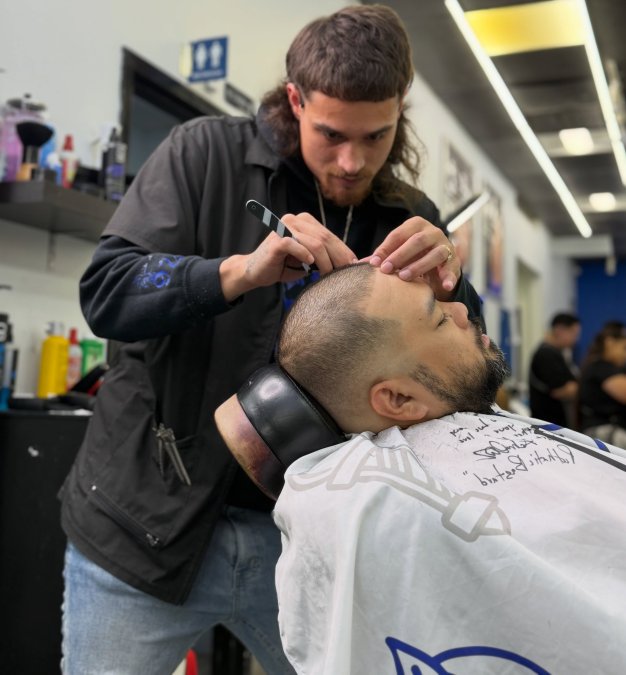
The split matters more than the total. Classroom time covers sanitation standards, anatomy, and state board exam preparation. The floor is where you learn fades, shaving techniques, and how to talk to a client who hates their last haircut. A common mistake is choosing a program by price alone and discovering the floor is oversubscribed, which means fewer real clients on your books before graduation.
Barber School Cost: Tuition, Fees, and Financial Aid
Tuition varies widely by state, program length, and whether the school is public or private, so there is no single national figure worth quoting. What you can control is how you pay for it, and whether the total cost makes sense against what you expect to earn in your first two years.
What Tuition Typically Covers
Most programs bundle instruction hours, a starter kit (clippers, shears, razors, capes), and state board exam preparation. Some charge separately for the kit, uniform, and exam fees, so request a full cost breakdown in writing before you enroll. A starter kit alone commonly runs several hundred dollars, and replacing clippers, shears, and blades over your first year is a recurring cost, not a one-time one.
A Realistic Cost Range
Private barber programs commonly land in the low-to-mid five figures for a full 1,000-to-1,500-hour course, while public community college programs and vocational-technical schools often cost a fraction of that for the same license. The gap is not about quality, it is about who subsidizes the instruction. Before you sign, ask three questions: What is the total cost of attendance including kit and exam fees?
Financial Aid and Payment Options
Federal student aid is only available at institutions that hold the right accreditation and are Title IV-eligible. Urban Barber College is NACCAS-accredited and Title IV-eligible across its three Bay Area campuses, which means qualifying students can access federal grants and loans rather than paying everything out of pocket. Payment plans and institutional scholarships are worth asking about directly.
The ROI Question: Tuition vs. First-Year Earnings
The honest way to judge cost is to compare total tuition against realistic first-year take-home pay, not against the top of the salary range. A new barber building a book often earns less in year one than in year three, because income tracks clientele, not the diploma. If your total program cost is roughly equal to what you expect to earn in your first full year behind the chair, the payback period is short.
Barber Salary Potential and Career Outlook
Barber earnings track clientele and business model more than they track talent. A licensed barber in a busy shop with a full book can out-earn a technically gifted barber working a slow walk-in chair.
Earning Factors: Location, Clientele, and Business Model
Three levers move your income: where you work, who your clients are, and whether you rent a chair or earn commission. Commission-based arrangements typically pay a percentage of each service, while chair rental means you pay a fixed weekly or monthly fee and keep the rest. The U.S. Bureau of Labor Statistics wage data for barbers is the most reliable starting point for regional averages, and it’s worth checking your metro area before you commit.
| Path | How You Get Paid | Best For | Main Trade-off |
|---|---|---|---|
| Commission | Percentage of each service | New barbers building a book | Lower take per cut |
| Chair rental | Flat fee, keep earnings | Established clientele | You carry slow weeks |
| Shop owner | Full revenue minus overhead | Entrepreneurs | Highest overhead, highest ceiling |
Apprenticeship vs. Formal Barber School: Which Path Fits?
Apprenticeships trade tuition for time and lower pay while you learn. This is the alternative most guides gloss over, and it deserves a straight comparison, including the part that trips people up: apprenticeship hours are not accepted for licensure in every state.
How the Apprenticeship Path Actually Works
An apprenticeship places you in a working shop under a licensed barber, often for a reduced wage. You avoid tuition and learn the pace of a real floor immediately. The catch is that the rules are set state by state. Some states allow you to substitute a set number of apprenticeship hours for the classroom requirement, others require a formal school program regardless, and a few have no apprenticeship pathway at all.
The Trade-Offs, Side by Side
| Factor | Apprenticeship | Formal Barber School |
|---|---|---|
| Upfront cost | Low to none | Tuition plus kit and fees |
| Pay while learning | Reduced wage | Usually none |
| Time to licensure | Often longer | Structured, 7-10 months full time |
| Instruction quality | Depends entirely on the shop | Standardized curriculum |
| State board prep | Varies; may be minimal | Built into the program |
| Financial aid | Not eligible | Eligible at Title IV schools |
Who Each Path Suits
If you learn best by repetition under a patient mentor, can afford a low wage for a year, and live in a state that accepts apprenticeship hours, the apprenticeship route can get you licensed without tuition debt. If you want a structured path to licensure, access to federal financial aid, and exam preparation built into the curriculum, school is the more predictable route.
The Hybrid Approach
A common pattern is to complete a shorter formal program to satisfy the classroom requirement, then spend your first year in a busy shop learning speed and client retention on the floor. That combination gives you the license, the structured exam prep, and the real-world repetition, without betting your entire training on one shop’s willingness to teach.
Licensing, State Board Exams, and What Comes After Graduation
Licensure is non-negotiable: every state requires a license to cut hair for pay, and the state board exam is the gate. The exam usually has a written portion covering sanitation and safety, plus a practical portion where you demonstrate cuts, shaves, and sanitation on a live model or mannequin.
California Board of Barbering and Cosmetology licensing requirements
The Business Side: Chair Rental, Client Retention, and Entrepreneurship
The technical skills get you licensed. The business skills keep you paid. This is the part of barbering that catches new professionals off guard.
Conclusion: Making the Decision That Fits Your Goals
The honest answer to whether barber school is worth it comes down to your plan, not the trade. If you want a structured path to a California barber license, access to financial aid, and a curriculum that covers both the chair and the business behind it, formal training shortens the road. Urban Barber College is NACCAS-accredited and Title IV-eligible, with hands-on training across three Bay Area campuses and a curriculum built to prepare you for licensure and for running your own chair. Get more info and see which program fits your schedule.
Frequently Asked Questions
Is getting a barber license worth it compared to apprenticing for free?
It depends on your state’s requirements. Apprenticeships can count toward licensure in some states but often take longer and may not include structured business or sanitation training. Formal barber school programs cover technical skills, state board prep, and client retention strategies, which can shorten your path to earning and give you a stronger foundation for building a clientele.
How long does it take to complete barber school?
Most full-time barber programs take 9 to 12 months to complete, depending on your state’s required hours and your schedule. Part-time options may stretch to 18 months or longer. Accelerated schedules and evening classes can help you finish faster if you need to work while training.
What does barber school cost, and is financial aid available?
Tuition varies by school and location. Programs that are Title IV-eligible, like those at NACCAS-accredited institutions, allow students to apply for federal financial aid including Pell Grants and student loans. Always ask whether a school is accredited and eligible for federal aid before enrolling. Payment plans and scholarships may also be available. Contact the school directly for current tuition and aid options.
Can a barber really make $100,000 a year?
Yes, but it typically takes time and a strong client base. Barbers who earn six figures often work in high-traffic shops, rent multiple chairs, or own their own barbershop. Commission-based pay plus tips can add up quickly once you have a full book of loyal clients. Location matters too: urban areas with higher costs of living often support higher prices per cut. Building client retention and offering additional services like beard trims and shaves can boost your income.
What are the disadvantages of being a barber?
Common drawbacks include physical strain from standing all day, repetitive motion injuries in the hands and wrists, and income variability early in your career before you build a steady clientele. Some barbers also find the first year after graduation challenging as they work to attract and retain clients. However, many of these issues ease with experience, proper ergonomics, and a solid business plan. The trade-off is often flexibility, creativity, and the potential to be your own boss.
Is 26 too old to become a barber?
No. Career changers are common in barbering, and many students are in their 30s, 40s, or older. Life experience and prior work history can actually help you build client relationships and manage the business side of barbering. What matters most is your willingness to learn hands-on skills, complete the required training hours, and pass the state board exam. Age is not a barrier to entry in this trade.